The core rule · Exterior paint
Dew point for painting: the rule that prevents most coating failures
More than 40% of exterior paint failures in the first two years trace to wrong-weather application — and the most expensive, most-missed version is a coat that went on fine and then met the dew point overnight.
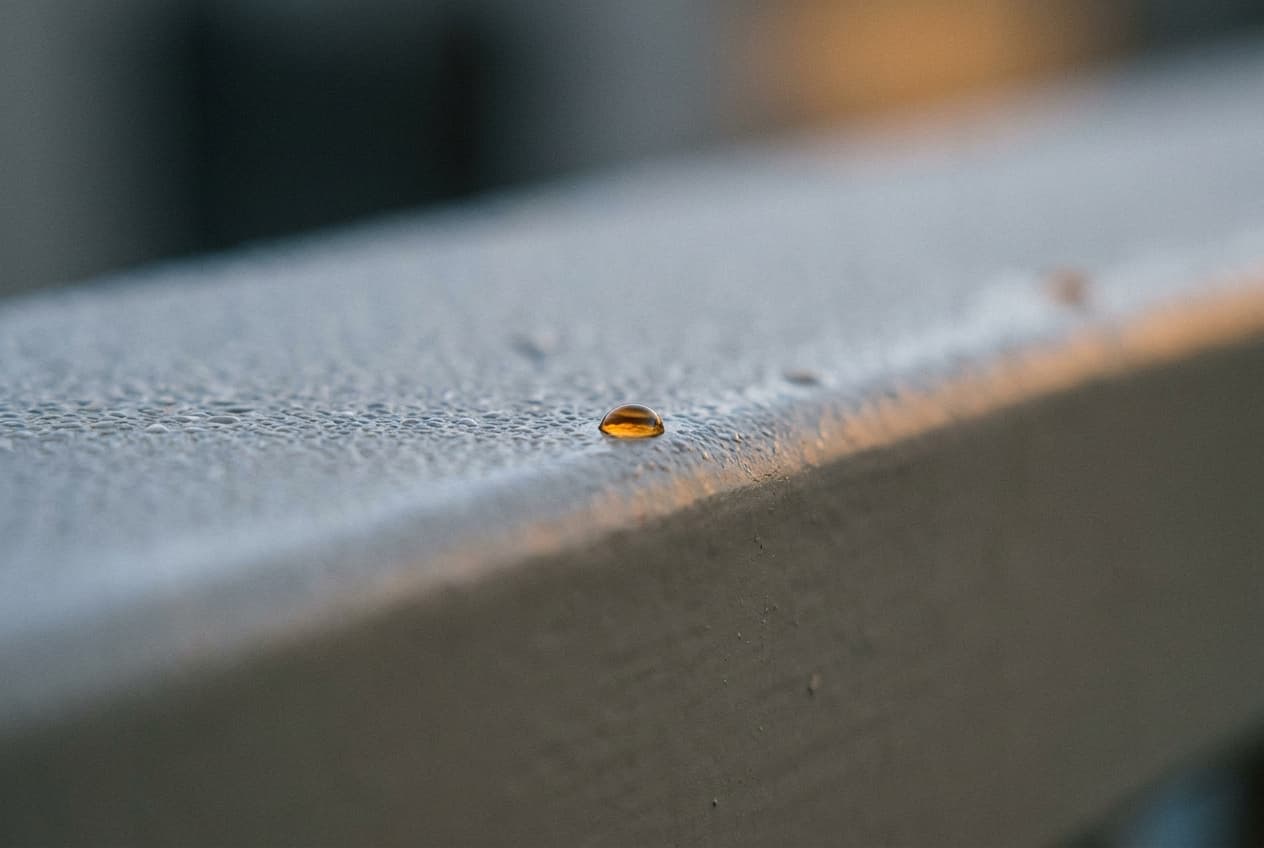
What the dew point actually tells a painter
The dew point is the temperature at which the air is fully saturated and moisture starts condensing out as dew. The important part for a painter isn't the number itself — it's the gap between your surface temperature and that dew point. When a surface cools to within a few degrees of the dew point, water condenses on it. If that surface is a fresh or still-curing coat of paint, the film gets wet from below the air, and you get blistering, surfactant leaching (those streaky brown runs), and peeling.
This is the failure a phone weather app never warns you about. It tells you tomorrow's high and a chance of rain. It does not tell you that at 4am your north-facing wall will sit at 47°F against a 45°F dew point under a clear sky — which is exactly when the damage is done.
The rule: surface temp 5°F above the dew point, through cure
The industry standard (ASTM D3276 / ISO 8502-42) is to keep the surface temperature at least 5°F above the dew point during application *and* all the way through the cure window. That 5°F margin isn't fussiness — it exists to absorb forecast and instrument error, and to cover the gap between the air temperature you can measure and the surface temperature you usually can't.
Note the two things that trip crews up: it's the surface, not the air; and it's through cure, not just the moment the brush touches the wall. A coat applied at 2pm in perfect conditions still fails if the surface drops to the dew point at 3am while the film is curing.
- Measure the surface, not the air — a $30 IR thermometer reads the wall in a second
- Keep 5°F of margin above the dew point
- Hold that margin through the full cure window, including overnight
- Stop painting about 4 hours before dew falls so the film sets before condensation arrives
Why air temperature lies to you
On a clear, still night, surfaces shed heat to the sky by radiative cooling and drop well below the air temperature — a roof, a wall, or a slab can read several degrees colder than the thermometer on your truck. Low wind and clear skies make it worse, because there's no mixing to even out the temperature and no cloud blanket to slow the heat loss.
So the dangerous nights are the pretty ones: calm, clear, and cooling fast. Those are precisely the conditions where the surface crosses the dew point while the air still looks fine — and the reason the rule is written about the surface and the spread, not the forecast high.
How to read the dew point before you commit a day
You can do this by hand: pull the hourly forecast for your job site, find the dew point, and check that your surface will stay 5°F above it from application through the night. The hard part is the surface estimate overnight — which is where the radiative-cooling dip hides.
paint-day does that math for you. The free city pages show a 7-day green/amber/red calendar that flags the overnight condensation risk a weather app misses, and the free job-site monitor emails you when a good window opens — or when the dew point is about to close one. Confirm the surface on-site with an IR thermometer before you coat; we're a scheduling and risk advisory, not a guarantee.
Common questions
- What is the dew point rule for painting?
- Keep the surface temperature at least 5°F above the dew point during application and through the entire cure window (ASTM D3276 / ISO 8502-42). The 5°F margin absorbs forecast and instrument error. It applies to the surface, not the air temperature, and through cure, not just at the moment of application.
- Can you paint when the dew point is high?
- What matters is the spread, not the dew point alone. A high dew point is fine if your surface stays at least 5°F above it through cure. The danger is when the surface cools toward the dew point — typically overnight under clear, calm skies — and condenses moisture onto the fresh film.
- Why does paint fail overnight even when the day was perfect?
- On clear, still nights surfaces lose heat by radiative cooling and drop below the air temperature, often crossing the dew point hours after a perfect application. Moisture then condenses on the curing film, causing blistering, surfactant leaching and peeling. That overnight dip is the failure mode a daytime forecast hides.
- How long before dew should I stop painting?
- Aim to stop painting about four hours before dew is expected to fall, so the film has time to set before condensation arrives. Latex and acrylic coatings are most vulnerable in the first hours of cure.
Check your week
Live exterior paint forecasts
See a 7-day go/no-go calendar built from the surface-vs-dew-point rule for your city.
More from the field guide
- Why did my epoxy floor turn cloudy, hazy or greasy?
- Can you paint when it's humid? Yes — but watch the right number
- Why is my deck stain still tacky and won't dry?
- How long does deck stain need to dry before rain?
- Why is my epoxy floor still soft, tacky or not curing?
- How to tell if your concrete slab is dry enough to coat
Last reviewed 2026-06-29. A scheduling & risk advisory — confirm the surface temperature on-site with an IR thermometer before you coat.