Failure diagnosis · Deck & fence stain
Why is my deck stain still tacky and won't dry?
If your deck stain is still sticky days after you applied it, it isn't curing slowly — it's stain that never soaked into the wood. Three things cause it, and two of them are about timing.
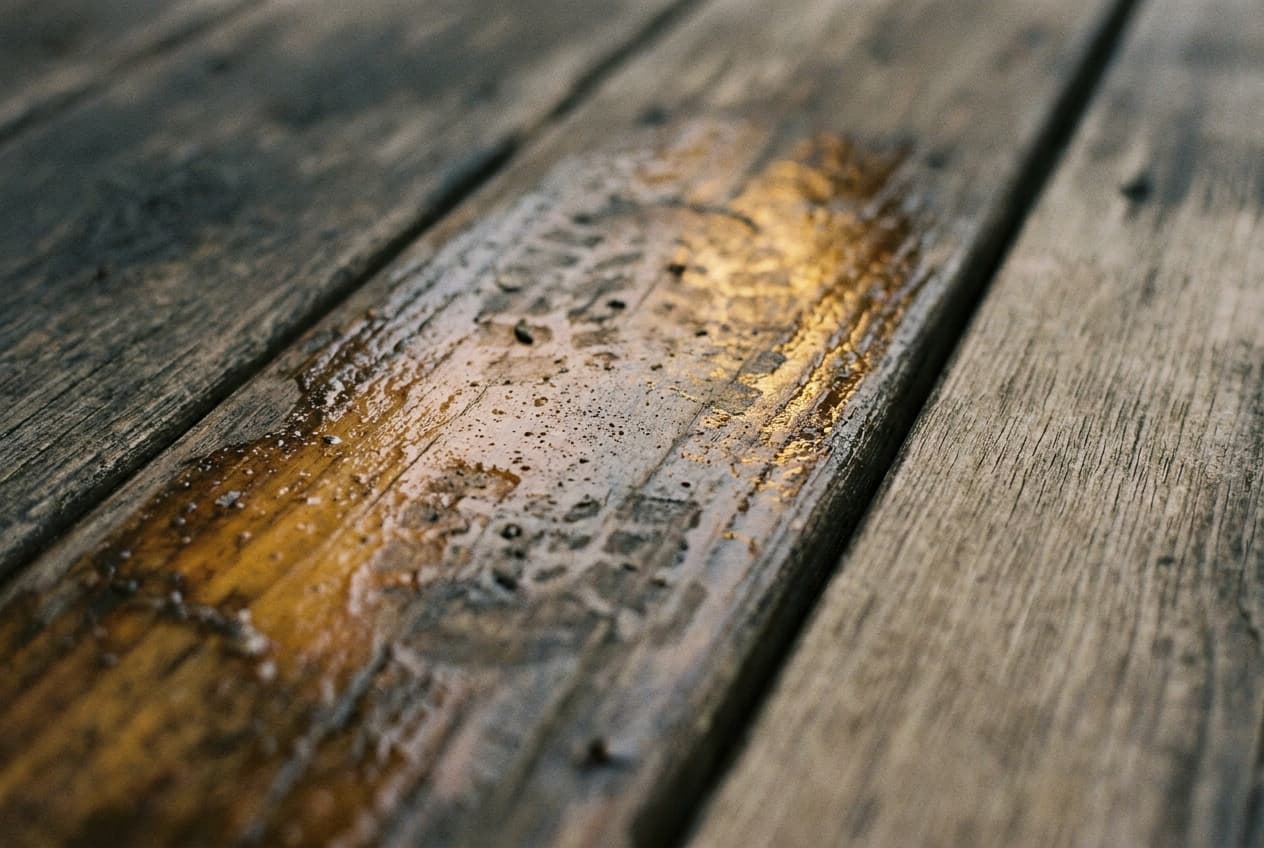
Tacky stain is almost always excess stain
A penetrating deck stain is meant to soak *into* the wood; whatever can't soak in has to be wiped off. When stain stays sticky, glossy, or tacky for days, it's because a film of excess stain is sitting on top of the boards with nowhere to go — and a surface film of penetrating stain never properly hardens. It stays gummy, picks up dirt and footprints, and eventually flakes.
Three things leave that excess behind: over-application (too much stain, or it wasn't wiped back), wood that couldn't absorb it (already-sealed, weathered, or mill-glazed boards), and weather that stopped it from setting — high humidity, low temperature, or dew landing on the film before it cured.
Did the wood actually absorb it?
Penetrating stains need bare, dry, open wood. If the deck was previously sealed or stained, or the boards are old and weathered to a hard glaze, the new stain can't sink in — so it pools on the surface and stays tacky. New pressure-treated lumber has the opposite problem: it's often too wet *and* too smooth ("mill glaze") to take stain for weeks after install.
The rule of thumb: water should soak into the wood within a minute or two. If it beads, the wood won't take stain either — and anything you apply will sit on top and stay sticky.
The weather half: humidity, cold, and dew
Even on absorbent wood, stain needs the right conditions to set. High humidity and low temperature slow the cure — the stain stays open far longer, so it stays tacky. And the most-missed culprit is the same one that ruins paint: the board dropped to the dew point overnight and condensation settled onto a film that hadn't set yet.
Stain wants the board dry and staying at least 5°F above the dew point through the set window, with temperature and humidity in range — and you should stop well before evening dew so the film firms up before moisture lands on it. Stain a damp or dew-wet board and it can't penetrate at all: it beads, stays tacky, and flakes.
- Bare, dry, absorbent wood — water should soak in, not bead
- Board stays 5°F above the dew point through the set window
- Temperature and humidity in range; stop before evening dew
- Wipe back any excess that hasn't soaked in within the maker's window (usually minutes)
How to fix a tacky deck
If it's excess on the surface, you can often rescue it: wipe the boards down with a rag dampened in the solvent the stain calls for (mineral spirits for most oil-based stains, the maker's cleaner for water-based) to lift the un-absorbed film, working with the grain. Then give it warmth, airflow, and a dry stretch to finish.
If the stain went onto wood that couldn't absorb it, or it's been weeks of gum, wiping won't fix the underlying problem — you'll need to strip and re-prep back to bare, absorbent wood and restain under the right conditions. Either way, don't add another coat over tacky stain.
Time the next one right
Most tacky-stain jobs are a timing miss: the right product on a board that was damp, too cool, or about to meet the dew point. Check the wood is dry and absorbent, then make sure it'll hold above the dew point with the temperature in range through the set window — including overnight.
paint-day watches exactly that. The free deck & fence stain city pages show a 7-day go/no-go calendar built from the dew-point and dry-window rule, and the free monitor emails you when a clean staining window opens — or when evening dew is about to close one.
Common questions
- Why is my deck stain still sticky after several days?
- Sticky or tacky stain is almost always excess stain that couldn't soak into the wood — from over-application, wood that was already sealed or weathered, or weather (humidity, cold, or overnight dew) that stopped it from setting. A surface film of penetrating stain never properly hardens.
- How do you fix tacky deck stain without stripping?
- If it's un-absorbed excess on the surface, wipe the boards with a rag dampened in the stain's solvent (mineral spirits for most oil-based, the maker's cleaner for water-based) along the grain to lift the film, then give it warmth, airflow and a dry stretch. If the wood couldn't absorb the stain at all, you'll need to strip and re-prep.
- Does humidity affect deck stain drying?
- Yes. High humidity and low temperature slow the cure and keep the film open longer, so it stays tacky. Overnight dew is worse: if the board drops to the dew point before the stain sets, condensation lands on the film and it can't cure. Stain when the board will stay about 5°F above the dew point through the set window.
- How can I tell if my wood will absorb stain?
- Sprinkle water on it. If it soaks in within a minute or two, the wood is open and will take stain. If it beads on the surface, the wood is sealed, weathered, or mill-glazed and won't absorb stain either — anything applied will sit on top and stay tacky until it's stripped and re-prepped.
Check your week
Live deck & fence stain forecasts
See a 7-day go/no-go calendar built from the surface-vs-dew-point rule for your city.
More from the field guide
- Why did my epoxy floor turn cloudy, hazy or greasy?
- Dew point for painting: the rule that prevents most coating failures
- Can you paint when it's humid? Yes — but watch the right number
- How long does deck stain need to dry before rain?
- Why is my epoxy floor still soft, tacky or not curing?
- How to tell if your concrete slab is dry enough to coat
Last reviewed 2026-06-30. A scheduling & risk advisory — confirm the surface temperature on-site with an IR thermometer before you coat.